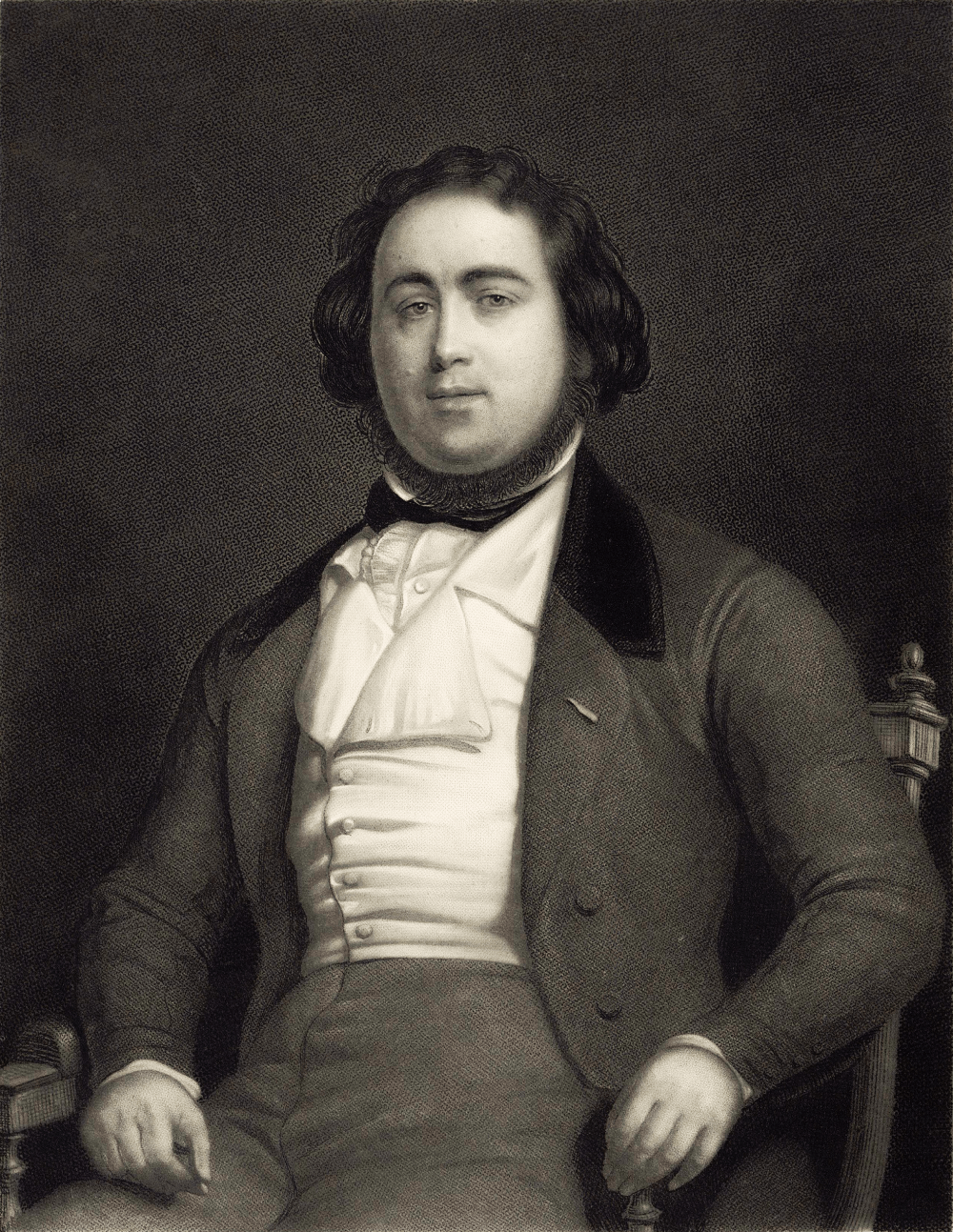
The European Demidoff Association was delighted to sponsor Michail Talalay’s publication of the first Russian translation of Anatole Demidoff's Letters on Russia, which were originally published in Paris in 1840. Demidoff wrote these letters to provide French readers with a deeper, more comprehensive view of Russian life, aiming to counter the widespread prejudices of the time. However, it is important to note that much of the existing literature on Demidoff remains negatively skewed. This bias stems from Demidoff's separation from his wife, Mathilde Bonaparte, which was acrimonious and prolonged. The fallout led to Demidoff being "blackened" in the various biographies of Mathilde published from the early twentieth century onward, which continue to distort the public record surrounding his Letters on Russia to this day.
The publication of the Letters was undertaken in close collaboration with Jules Janin, the powerful critic of the Journal des Débats and a close friend of Demidoff. Janin had earlier accompanied Demidoff on his 1837 scientific expedition to Southern Russia, where he initiated a format for Demidoff to print a series of letters in subsequent issues of the prestigious French journal. During the journey, Janin serialized four of Demidoff’s dispatches, which appeared in the Journal des Débats between the autumn of 1837 and the spring of 1838. The articles were subsequently compiled and published in book form under the title, Esquisses d’un Voyage dans la Russie Méridionale. Janin would also loyally support Demidoff’s final literary contribution, Étapes maritimes sur les côtes d'Espagne, undertaken by Demidoff in 1847. In his private collection, the author, holds a letter written on 29 June 1859 by Janin to Auguste de Sainson, a long-serving colleague and friend of Demidoff, where Janin thanks de Sainson for forwarding a copy of the two-volume publication. Janin goes on to advise that he agrees to publish a favourable review of Demidoff's latest book in a forthcoming issue of the Journal des Débats.
Regarding the contents of Demidoff's letters, it is important to note that they were published in close collaboration with Tsar Nicholas I and members of his inner circle. Professor Natalia Tanshina, in her informed presentation on 26 August 2026 at the Tula State Military Museum, confirmed that the publication of Demidoff's Letters was a coordinated initiative by Anatole Demidoff and the highest Russian authorities—namely Count Benkendorf, Count Uvarov, and Prince Volkonsky—aimed at fostering a positive image of Russia in the French press. As early as 1834, Demidoff had proposed to Benkendorf a Project for Publications in Defence of the Russian Government. Furthermore, Demidoff's views were entirely non-confrontational; the publication project was fully aligned with the Russian authorities and supervised by the Tsar. Most importantly, Demidoff hoped that this project would secure him permission to reside in Paris for an extended period. In other words, we can now firmly reject the widespread reports in media and literature claiming that the Letters angered the Tsar and caused his displeasure with Demidoff.
The publication of the Letters took place against a political background of tense and distrustful relations between France and Russia. The rise to power in 1830 of Louis Philippe I, the “King of the French,” unsettled Tsar Nicholas I. The new French monarch assumed power from a revolution—although lasting only 30 days—while promoting liberal and moderate views. The two regimes were locked in a persistent “newspaper war,” with periodicals in Paris and St. Petersburg trading bitter ideological articles.
It is unlikely that Demidoff’s close association with the leading Romantic painters of the 1830s—who welcomed the replacement of the reactionary Bourbon monarch Charles X with Louis Philippe—displeased the Tsar. In fact, the author's private collection includes an original letter from the artist Horace Vernet to his son-in-law, Paul Delaroche, dated 29 June 1836. In it, Vernet discusses his imminent arrival in St. Petersburg, where he stayed until September 1836 and was received by Tsar Nicholas I. That same year, Vernet painted a picture for the Tsar depicting Napoleon Bonaparte's Imperial Guard. He returned to St. Petersburg in 1842 to paint portraits of the Tsar and his family. Ultimately, the Tsar was passionate about art and assiduously collected prints of Delaroche’s work, amongst works by other Romantic artists.
However, what may not have positively impressed the Tsar was Demidoff’s growing friendships with the inner circle of Louise Philippe. A close friend of Demidoff was Count Charles-Henri-Edgar de Mornay, a leading foreign diplomat whom Eugène Delacroix famously painted sitting relaxed alongside Demidoff in 1833. Demidoff further forged lasting friendships with the King’s sons, the Duc d’Orléans and the Duc de Nemours; both served as royal patrons of the French Jockey Club, of which Demidoff was a founding member in 1833.
Public reaction to the Letters was sharply divided. The Journal des Débats was widely regarded as the unofficial mouthpiece of the conservative bourgeoisie and the "Party of Order" during the July Monarchy. Demidoff's Letters favourably impressed the cultural elites and pro-establishment circles with its balanced tone. This elite segment, largely driven by high-finance and business interests, viewed Russia as both a vital economic partner and a bulwark of continental stability. In contrast, liberal and republican citizens bridled at this flattering depiction of an empire that, to them, symbolized absolute monarchy, censorship, and the suppression of European liberty. Dismissing Demidoff’s arguments as state-sponsored propaganda bankrolled by an affluent aristocrat looking to buy influence, they viewed the Journal des Débats as merely another arena for the ongoing geopolitical duel between the French and Russian crowns.