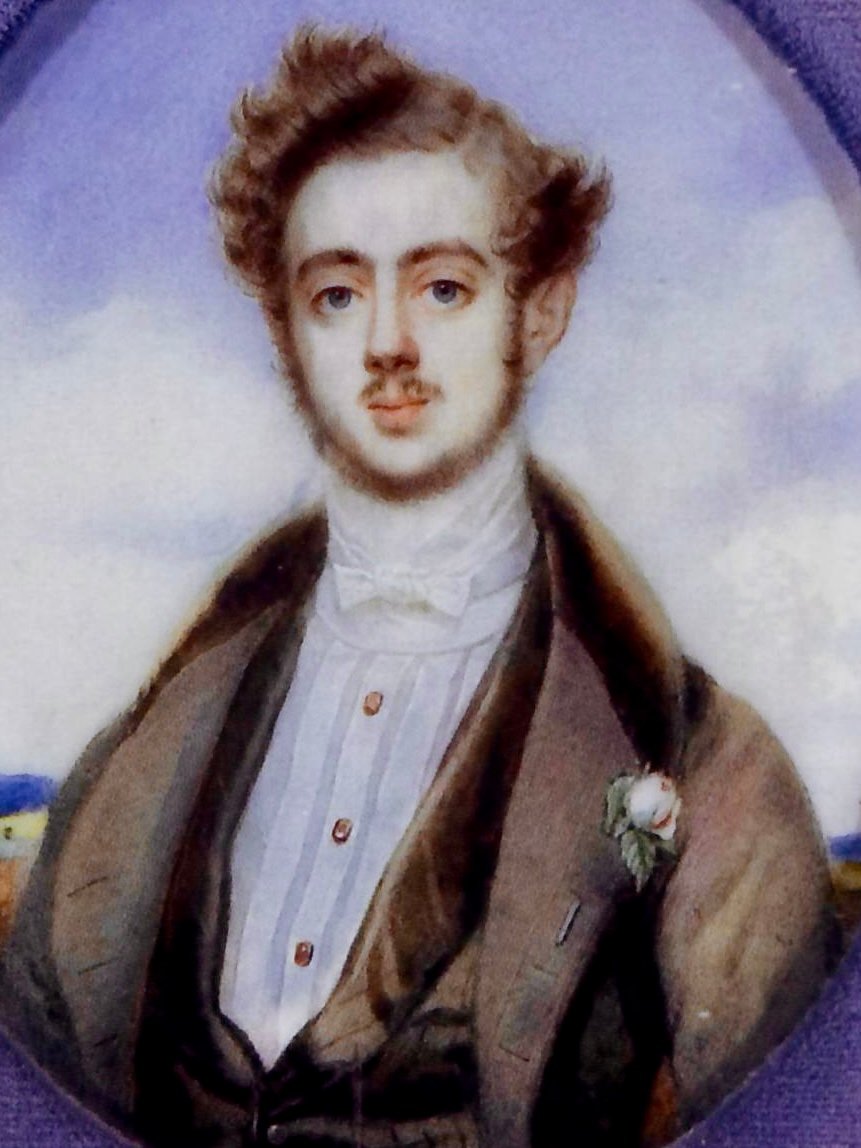
The story of Mathilde Bonaparte and Anatole Demidoff has been presented to date in various articles and in a series of biographies on Mathilde Bonaparte predominantly published in France. These started with 'Souvenirs des années d'exil', written by Mathilde Bonaparte's cousin, Count Joseph-Napoléon Primoli, which appeared in the Revue des Deux Mondes on 15 December 1927. These were followed by several biographies of the princess: La Princesse Mathilde : sa vie et ses amis, by Ferdinand Bac (Paris: Librairie Hachette, 1928); La princesse Mathilde, un règne féminin sous le Second Empire, by Marguerite Castillon du Perron (Paris: Amiot-Dumont, 1953); and, more recently, Mathilde, princesse Bonaparte, by Jérôme Picon (Paris: Flammarion, 2005), amongst others. Each of these publications builds on a similar narrative, often based on innuendo and unfounded hearsay evidence, which positions Princess Mathilde in the most positive light while casting Anatole Demidoff as a crass, violent, uneducated 'Cossack' seeking to elevate his lowly social position by entering the Bonaparte family.
A fairer depiction of the character of Anatole Demidoff emerges in the forthcoming publication by Professor Natalia Tanshina, 'Anatole Demidoff and Mathilde Bonaparte', which is due to publish shortly and is sponsored by the International Demidoff Foundation. In place of the ceaseless repetition of accounts found in earlier biographies of Princess Mathilde, it is based on documented evidence found in archives in Russia.
In addition, a more balanced account of the story of these two dynamic personalities will emerge through another forthcoming publication based on the 'Mathilde Archives'—specifically Lots 188, 189, 186, 192, and 205, which were put up for public auction at 'Libert' in Paris on 2 July 2009. These original documents once formed part of the Joseph-Napoléon Primoli collection at the Fondazione Primoli in Rome, with some of the correspondence previously cited by Marguerite Castillon du Perron. The documents of the Fondazione Primoli are practically inaccessible these days. However, what is little known is that Count Primoli gifted a portion of these archives to his 'natural' son, cited by some sources as André Dazaubrois (1889–1979). It is believed that it was his descendants who placed the 'Mathilde Archives' up for public auction at Libert in July 2009. The content of the 'Mathilde Archives' was further augmented by purchases of part of the "Justiniano Bonci Archives" (pertaining to Anatole Demidoff's long-standing lawyer in Florence), as well as many other original manuscripts that have come up for private sale or public auction. The entire collection of original manuscripts numbers in the many hundreds.
The unpublished manuscripts present the breakdown of a marriage that was bitter, painful, and filled with recriminations. They make for painful reading, yet they show that we are dealing with true-to-life individuals, with all their faults and virtues. The documents show that the path towards formal separation was filled with intrigues, missteps, mixed communications, and poor decisions.
In the author's first publication on the topic, "A Tale of Two Dynasties: Bonaparte and Demidoff", published in issue #32 (2003) of the European Royal History Journal, an important contributing factor that was cited behind the breakdown of the marriage was the persistent financial difficulties of Mathilde's father, Jerome Bonaparte, who viewed Demidoff as a source of financial rescue. A review of the unpublished manuscripts underscores this point and shows that Jerome Bonaparte engaged directly with the court of the Tsar to ensure a settlement agreement in his daughter's favour proceeded with minimum delay. In a letter to Mathilde dated 10 August 1846, Prince Jerome asks Mathilde to forward copies of the letters she has posted to Count Orloff and the Tsar to ensure that they were properly framed. The proposed letter to Count Orloff was rejected.
What Mathilde and her father knew, though it totally blindsided Demidoff, was that his recall to St. Petersburg in early 1846 to finalise a Will in favour of his wife and any forthcoming children was part of a plan to create the legal instrument that would be used against him in the Separation Agreement. The Will stipulated that, following Demidoff's passing, his wife would have the option to secure a considerable annual payment from his estate. In a letter dating to February 1846 to Count Paul Kisseleff, the Russian Ambassador to France, Mathilde bared her soul in the course of the eight-pages, explaining her desire for an irrevocable separation that required financial independence to be feasible. Demidoff wished to live openly with his mistress, Valentine de Sainte-Aldegonde (1820-1891), while still married to Mathilde. At a fancy-dress party at Villa di San Donato in the summer of 1845, Mathilde and Valentine confronted each other leading to a violent scene initiated by Demidoff. In Mathilde's correspondence to Kisseleff she further attached a letter to the Tsar explaining these same reasons for a separation. The original letter to Kisseleff was returned to Mathilde with assurances that its contents would reach the Tsar and now forms part of the private collection of manuscripts.
It was Count Alexandre Stroganoff (1795–1891), Demidoff's cousin, who was confirmed by the Tsar's court as Mathilde's contact person in St Petersburg to ensure she was clear on the process to follow. Stroganoff, together with Paul Dournoff (1804–1864), another close cousin to Demidoff, had been the original witnesses to Demidoff's Last Will dated 4/16 September 1846 (Julian/Gregorian Calendar). The correspondence contains an angry exchange with Mathilde following poorly judged guidance she received from her uncle, Prince Paul of Wuerttemberg (1795–1852)—who urged her to move into a convent—and from her lawyer in Paris, who advised her to reject the settlement agreement proposed by Demidoff that, in fact, had the support of the Tsar's court. During the time that Demidoff was sorting the Will in St Petersburg, Mathilde had also fled their residence at 105 Rue Saint-Dominique in Paris. She took with her personal items, including the jewellery that belonged to Demidoff, to move to 10 Rue de Courcelles, which had been arranged by her lover, Count Émilien de Nieuwerkerke (1811–1892). In other words, the correspondence makes clear the true-to-life travails of individuals dealing with an emotionally charged entanglement.
Mathilde would not receive any money from the settlement until 29 March 1847, when the first quarterly instalment of 50,000 [francs] was received from Demidoff's estate. During this early period, Demidoff was still seeking a reconciliation with his estranged wife, while Mathilde Bonaparte was resolved to commence a new chapter in her life. He would later petition the Tsar for a divorce from his estranged wife which would never come to pass meaning that the two remained formally married for the rest of their lives.